
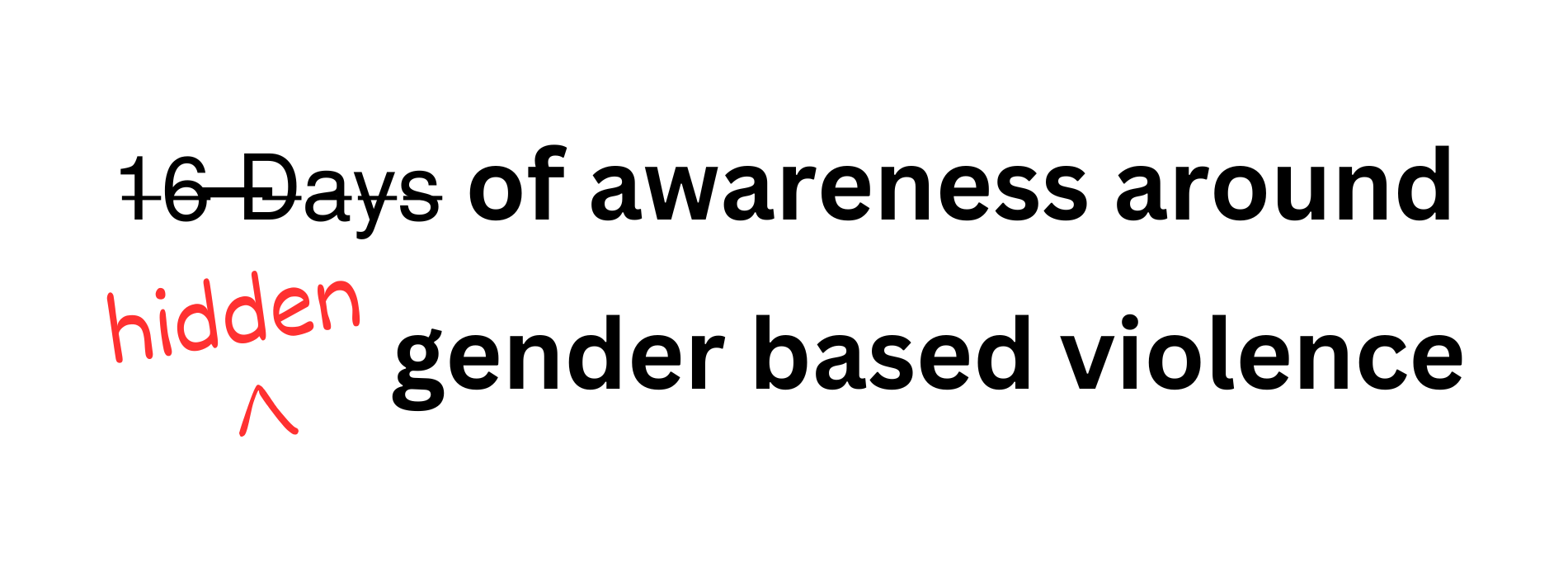
Mapping Hidden
Gender-Based Violence in Calcutta
—
What is it like being a woman in India? That’s like trying to describe the taste of water— so constant, so familiar, you’re surprised when someone asks.
But we keep telling its story.
Today marks the 25th year of the International Day for the Elimination of Violence Against Women and Girls, observed globally to raise awareness and mobilise action against gender-based violence. It also begins the 16 Days of Activism, a more targeted period to synthesise global effort ending on 10 December, linking Women’s Rights to Human Rights.
Yet beneath these visible assaults lies another reality —the hidden, everyday violence that women and queer persons navigate constantly.
With its insidious shape-shifting nature depending on the body you’re living in: the quiet vigilance of an upper-class woman in an Uber — looking out for shifty eyes in the rear-view mirror while mentally mapping exit points. The pain of holding her bladder through work hours for the elderly street vendor, because no public toilet exists for her. The sting of a mother pulling her child away that screams “you will never belong” as a transwoman walks by in an upmarket mall. And the myth of ‘having it all’ for the middle-class woman, who carries two shifts —one paid and the other not.

Because this violence is normalised, it remains unseen. And what remains unseen remains unchallenged.
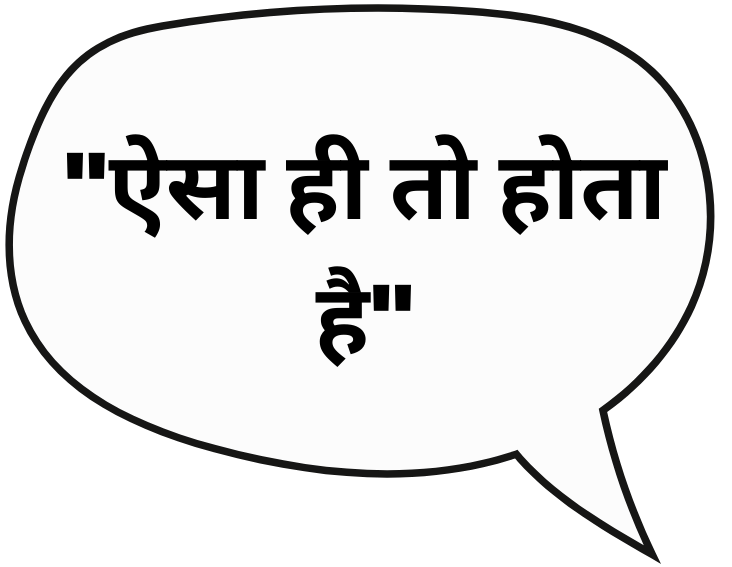
Hidden gender-based violence is the violence we don’t see because we’ve been trained not to. It’s the violence that hides behind “this is how things are”. And because it leaves no bruises, it leaves even deeper scars.

So which invisible violences do women negotiate with and surrender to everyday? How safe is the city space for the different women living in it? How violent is the male gaze? And how does it change as it lands on different bodies across caste and class?

Join Anahat for Change Foundation as we –together– ponder over, tease out, discuss, debate and analyse these questions over a series of conversations and an exhibition where we present the first draft of our collective map of seen/unseen violences across the city.
Yes, we’ve been having this conversation for centuries. And we will keep having it, not out of despair, but until the conversation finally becomes change.
Share pictures and/or conversations on what it means to be a woman or a queer person in India. These could be pictures of:
- A dimly lit street corner
- A bus stop you were harassed at
- A restaurant that refused to let you enter because you ‘look a certain’ way
- Statements and conversations with friends, family members, colleagues that made you feel small


Document. Disrupt. Defy.
Examples of moments you can share for our map
By placing these fragments across the city’s map, we hope to reveal a truth that is both intimate and collective: that hidden violence is not random, not isolated and not trivial. It shapes how women and queer people move, behave, dress, speak and survive — every single day. And no city can call itself safe while such violence remains unacknowledged.

This project is an invitation to witness, to reflect and to act. To recognise that change begins not only with outrage of assault, but with naming subtle violences that accumulate long before them.

Today and through these 16 Days of Activism, we recommit to making public spaces safer, more inclusive and more accountable — not just in moments of crisis but throughout the year, by making invisible violence impossible to ignore.
DM your images/texts to us on our social media platforms or WhatsApp them to us.
We promise to keep these entries completely confidential, so send us your most hated moments!
Reach out to
- Whatsapp/Call/Text: +91 90076 03278
- Email: communications@anahatngo.org
- Linkedin- https://www.linkedin.com/company/anahat-ngo/
- Instagram- https://www.instagram.com/anahatngo/
- Facebook- https://www.facebook.com/Anahatforchange