
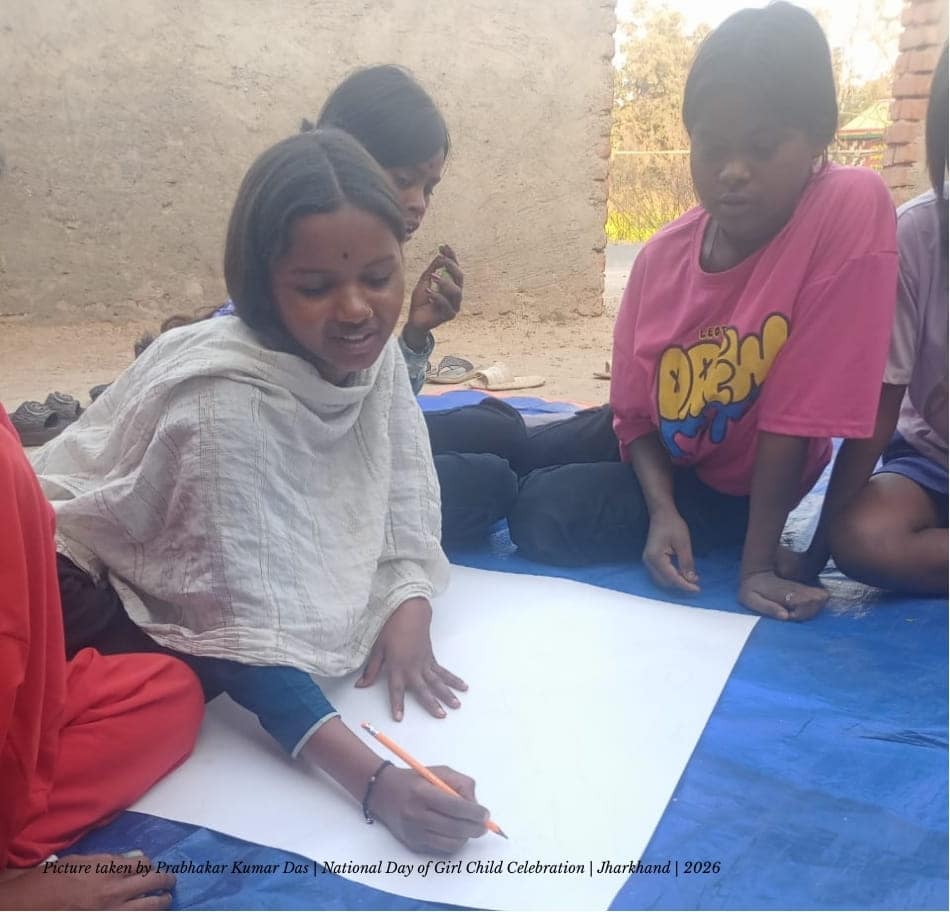
On 24 January 2026, our teams in Alipurduar and Jharkhand observed National Girl Child Day. A day that could have meant so much, if the symbolic deference it held for adolescent girls actually materialised. A day that requires some introspection in the differing ways it was conducted at both places.
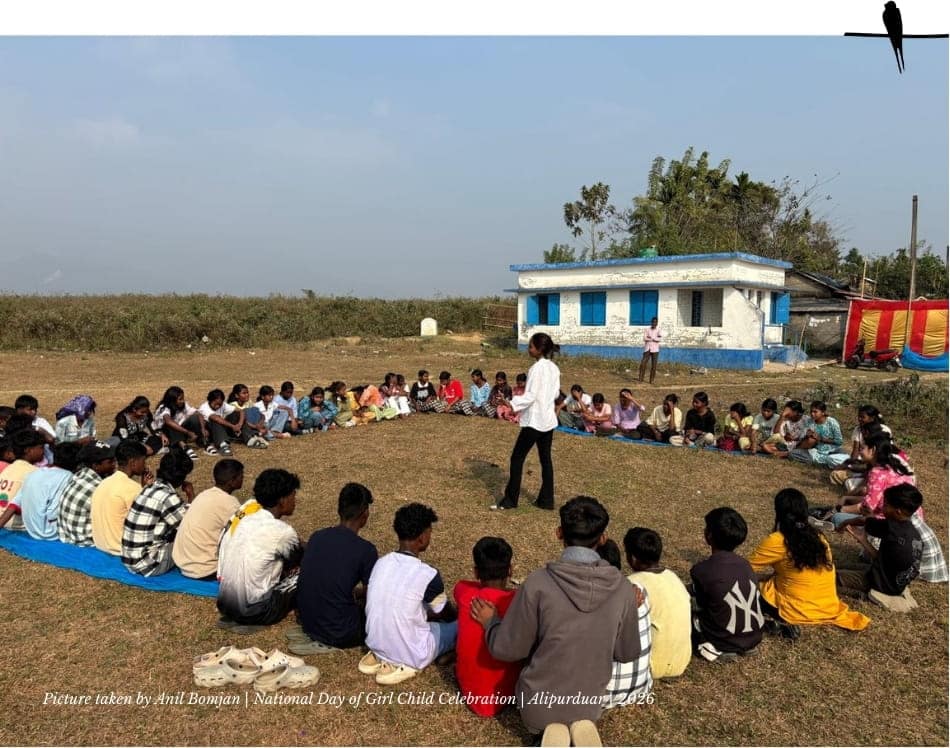
In Alipurduar, 61 children from Ramjhora and Dalmore tea gardens participated in various games and exercises – role plays, Tug-of-War and PRA (Participatory Rural Appraisal) sessions conducted by our leaders Aanchal and Anil– offering a platform to girls to talk about their lived everyday experiences. And if there’s one key takeaway, it’s this: the solution to gendered discrimination lies in changing society’s mindset. Not through karate or setting curfews. The girls had enough with taking responsibility for their own safety. It’s time the onus was put on society for misbehaving in the first place, they said.
Most importantly, Alipurduar’s programmes revealed a troubling gap between the children’s need to feel safe and their (dis)trust in their family members. While the PRA sessions identified risks like street harassment and intoxication, many kids admitted they’d keep mum because… let’s admit it, what’s the point? Their parents blamed them anyway. What they were actually telling us was that we needed to stop focusing on children alone. And instead strengthen their worlds, their ecosystems by speaking to parents and addressing the “blame culture”. So that they’re actually approachable when the need arises.

In contrast, Jharkhand’s event followed a more traditional path. The Principal of Bendi High School led the day’s proceedings by speaking on the importance of the day, followed by a ceremony where adolescent girls, teachers and government workers tied red threads on one another. While these events were conceived and conducted from a place of solidarity, we acknowledge that the approach however mirrored the very social structures Anahat seeks to dismantle. By allowing a male authority figure to dominate the discourse, the day was subtly and wholly usurped, placing girls in a passive role rather than giving them the platform to speak for themselves.

The importance of this distinction cannot be overstated. In Alipurduar, girls tied a symbolic red thread on each other, symbolising a deeply personal commitment to their own future strength and identity. The Jharkhand event on the other hand, highlighted a common pitfall in development sector programming where symbolic gestures are prioritised over structural shifts. When the red thread is tied by teachers and the Principal to adolescent girls, it transforms a powerful individual pledge into a vacuous social gesture, erasing self-actualisation and any sincerity. We’re ashamed to admit that the way the Jharkhand event was conducted, risked suggesting that inalienable Rights and dignity belonging to adolescent girls were a gift bestowed by institutional authorities.

But we didn’t sit on our haunches. We took a moment to acknowledge where we faltered and how we can do better.
In a team reflection soon after, we posed a simple question: if the only day dedicated to the girl child is led and defined by established male authority figures, have we not failed in dismantling those very power structures for which Anahat was set up?
Our future programmes will not just talk about equality but actively exercise it by being led by our young girls. This is what we learned:
- Centring girls’ voices: By having a male Principal lead the day’s events in Jharkhand, we unintentionally magnified the social structure that seeks to silence rather than think girls capable enough to speak for themselves
- Always prioritising girls: While in Alipurduar, the Red thread symbolised a deep personal commitment by each child, in Jharkhand, the act became a vacuous social gesture, erasing any sincerity
- Active leadership vs. passive participation: National Girl Child Day should not be a day where girls are “celebrated” as passive recipients of adult wisdom. It is a day for them to reclaim space, as seen in the Alipurduar girls’ team victory and their candid discussions on community safety

We have a responsibility to ensure that at least this lone day belongs to the girls. True autonomy is not something given by authority figures through a speech, it is something claimed by the girls themselves through action, fiery debate and discussion.
If we are to truly support the next generation, we must ensure they lead the day’s events and lives on their own terms.
