
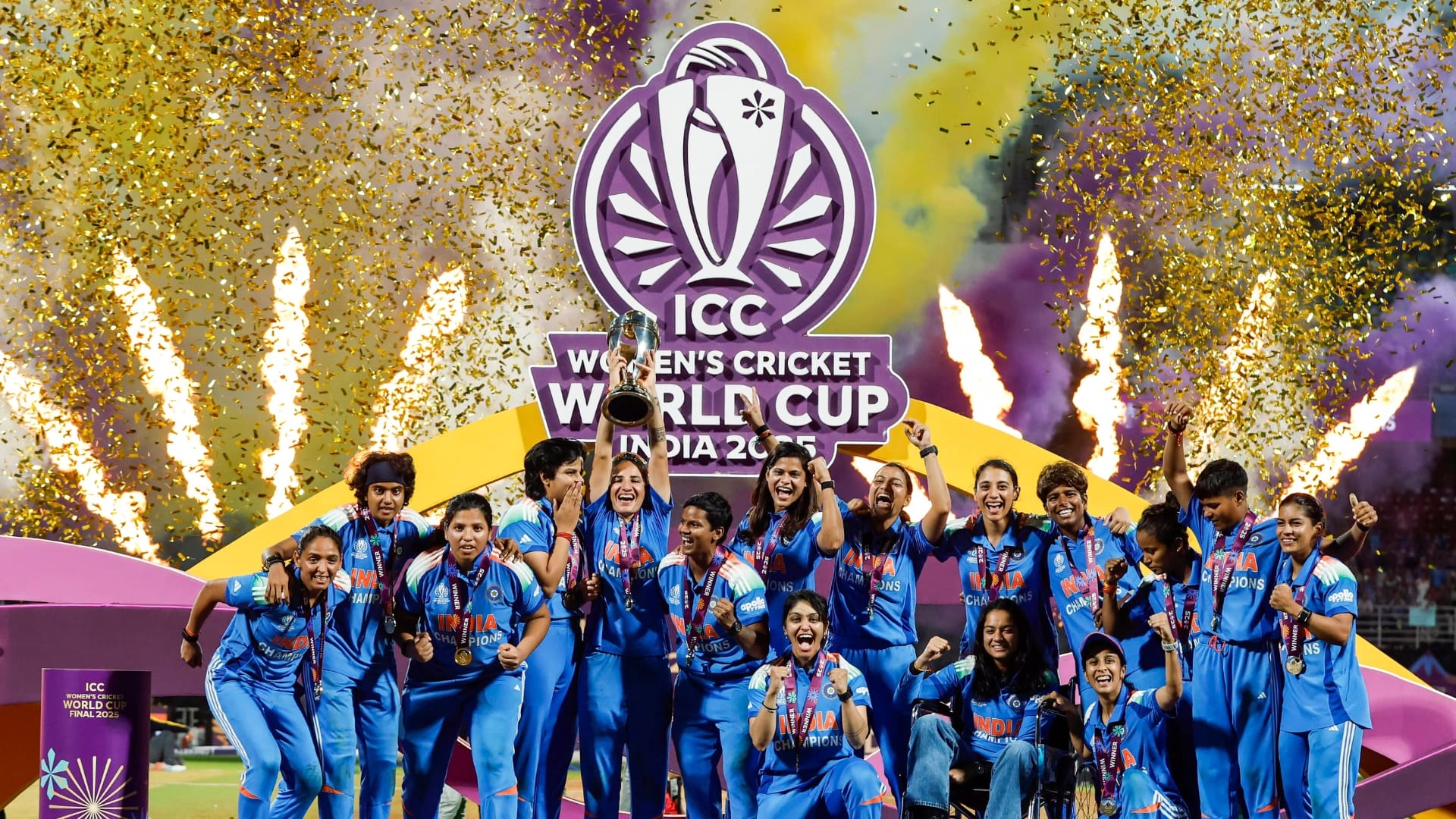
Under the floodlights, the geography of world cricket shifted. On November 1, 2025, India made history by winning the World Cup after 13 years. Yet, this victory was not merely a triumph of discipline and determination—it was a statement on instinct, emotion and the urgent need to reimagine how an entire nation perceives its women. The story here is not “women’s cricket” – it is Indian cricket. The athletes who delivered this moment deserve to be recognised as just that—athletes.
A four-year-old girl in any Indian town could articulate the subtext of this win. India’s inconsistent record in women’s cricket mirrors its deep gender disparities. The World Economic Forum ranks India 131st out of 148 countries on gender equality. Cricket, dominated by male decision-makers and traditions, has long mirrored a society where women’s role in the game was to pour the tea, not play it.

From barriers to questions
Rather than applauding what the players overcame, it is time to question why they had to. The 2025 World Cup win is a story of exceptional personal perseverance, not systemic support. Many athletes began their journeys as afterthoughts—an extension of their brothers’ hobbies or defiance of social constraints. Deepti Sharma tagged along to her brother’s practice. Shafali Verma, before her World Cup match-winning 87 runs and taking two wickets, once disguised herself as a boy just to play—an astonishing reality in a cricket-obsessed nation.
The structural deficit
India’s cricketing paradox is glaring: a population of 1.45 billion but only three World Cup titles—1983, 2011 and now 2025. Australia, in comparison, holds seven. India is the first non-Western nation to win the Women’s World Cup, a milestone comparable to Tagore’s Nobel Prize. Yet only Australia and England have sustained success. The reason is structural: long-term investment and institutional commitment.
The BCCI’s (Board of Cricketing Control of India) wealth must now be channelled beyond elite performance. Money should not just enrich the current squad but energise the grassroots—from Kolkata’s shanties to Bendi’s parched fields. A true cricketing dynasty and a gender-just society, begins when millions of girls wield bats with the same normalcy as their brothers.
Learning from global models
Australia’s dominance reflects its deep-rooted sporting culture. The Women’s Big Bash League (WBBL) built both infrastructure and opportunity, producing a talent pool envied worldwide. India needs an equivalent structure—robust domestic leagues, competitive tournaments and scouting mechanisms that reach beyond men’s IPL (Indian Premier League) spectacles.
The invisible architecture of support
Behind each athlete stands a family defying patriarchal expectations. Parents and siblings who treated their daughters’ and sisters’ dreams as legitimate laid the foundation for this success. Such familial scaffolding counters systemic neglect and fosters resilience where institutional support has been absent.

Representation and cultural change
Role models matter profoundly. Vice-captain Smriti Mandhana captured this when she envisioned “a street cricket match with two girls’ teams playing, not professionally but just for the love of the game.” The real legacy of this win will be measured not only in trophies but in little girls who now see cricket as theirs to play.

A mirror to society
The scenes at DY Patil Stadium—packed stands in torrential rain, spectators who refused to leave—hint at an evolving India: aspirational, inclusive, ready to celebrate women as sporting icons. Yet administrative neglect lingers. Poor planning and venue chaos by the BCCI betrayed a lingering apathy. This is not new; in 2013, women’s matches were pushed aside for a men’s domestic tournament. Such decisions signal how deeply systemic bias runs.
Vulnerability as strength
Jemima’s tearful admission of anxiety during the post-match conference offered a different lesson: vulnerability is not weakness. It is part of the athlete’s evolution, one made possible only by empathetic teammates and a supportive ecosystem. Normalising such admissions is itself a quiet revolution against gendered expectations of stoicism.
The need for structural and political reform
Pay parity, while nominally achieved in match fees, remains incomplete—men play more matches and earn higher retainers. Real reform demands maternity policies, re-entry pathways, and workplace cultures that treat women as professionals, not exceptions. Historically, progress has hinged on political will; it took Sharad Pawar’s tenure as BCCI president to unify women’s cricket under its umbrella. Sustained reform requires that same intent, not symbolic gestures after international triumphs.
India’s 2025 World Cup victory should not be read as a culmination but as an inflection point. It exposes a paradox: women must first win to be seen as equal. The next revolution in cricket—and in Indian society—will arrive when women no longer have to prove their worth to deserve investment, respect or belief
Written by: Kritika Dey, Communication Lead